Introducing Science in Pills
Science in Pills is our latest valuable resource, designed to answer your most common questions through scientific evidence. This initiative curates a collection of insightful articles, organized by topic, to provide you with reliable, research-backed information in a concise and accessible format.
1. Tissue Processing
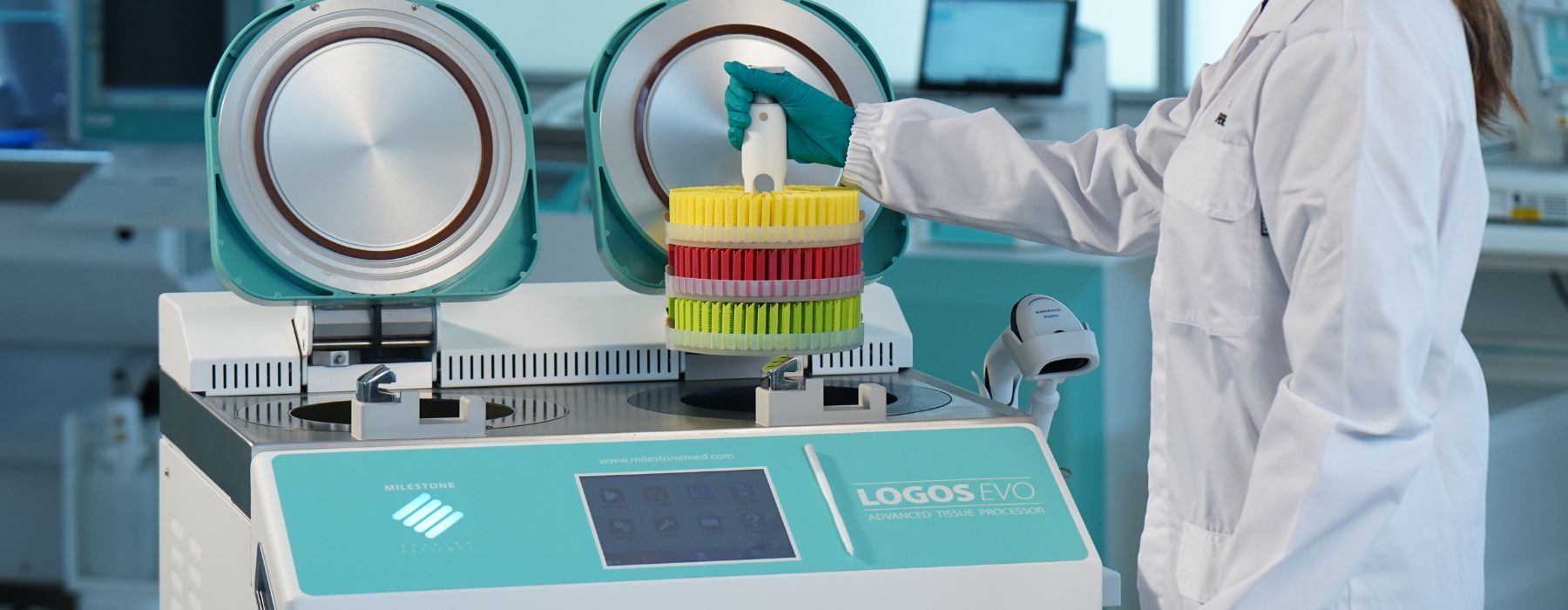
In this first episode of Science in Pills, we explore the benefits of Milestone’s hybrid technology for tissue processing. This innovative approach enhances both quality and efficiency, delivering significant improvements in tissue morphology and Immunohistochemistry (IHC) results.
This document provides a clear summary of the reviewed articles. For a deeper understanding of the topics discussed, we encourage you to refer to the full text of the articles.
Conventional vs. hybrid tissue processing in routine histology in terms of quality and timesaving
ARTICLE 1
“Microwave Tissue Dehydration: A Fast and Reliable Tissue-Processing Method in Pathology”
Yanwei Li et al. Analytical and quantitative cytology and histology.
ARTICLE 2
“Accelerated Tissue Processing with Minimal Formalin Fixation Time for 9-Gauge Vacuum-Assisted Breast Biopsy Specimens”
Joris P. Bulte et al. American Journal of Clinical Pathology.
Latest Articles
Advancing pathology through innovation: The VPC lab vision
Innovation in pathology combines advanced technology, lean workflows, and skilled teams to ensure fast, accurate, and safe diagnoses, improving patient care and lab efficiency. Watch the full case study to see it in action.

Meet us at USCAP 2026
USCAP 115th Annual Meeting will take place from 21 to 26 March 2026 at the Henry B. Gonzalez Convention Center – San Antonio, Texas. Networking, learning, and striving for success, we’ll be there to take you on a journey of innovation, exploration and education. Meet us there!
Science in Pills – 5. Tissue Processing
In this edition of Science in Pills, we showcase how Milestone tissue processors offer efficient and high-quality specimen processing for research, genome editing, proteomics, RNA interference, electron microscopy, and macromolecule analysis.