
Safety in Sample Collection
Mr. Ralf Lieberz shared the experience of his OR staff with UltraSAFE. Over the last two years the staff (about 60 people in 15 operating theatres) has been enhancing the safety of the sample collection by incorporating in their process the use of UltraSAFE. In Germany, like in other major countries, the exposure limit to formalin is determined by law. In the event of excessively high exposure, danger areas must be marked, access restrictions must be implemented, technical protective measures must be taken, databases for each employee must be maintained and documentation of every working day and occupational healthcare is required. Traditionally, the OR staff has been accustomed to manually filling buckets or bags with formalin, thereby consistently exposing operators to toxic fumes. Additionally, this manual process lacked the precision needed to measure the correct amount of formalin for each sample, posing a risk of compromising the fixation process.

“Here in Wuppertal, we have about 60 people in the surgery and they are very happy with this system”
Mr. Lieberz reports how the use of the automated formalin dispenser, UltraSAFE, enables formalin dispensing in a closed environment, preventing any toxic contact, and streamlining the filling process to achieve greater standardization and comfort. An additional level of safety is ensured by the built-in charcoal and HEPA filters of UltraSAFE and the capability to be connected to the existing ventilation line.
Optimal Fixation Conditions
It’s no secret that the accurate identification of biomarkers in immunohistochemistry or molecular biology requires an optimal pre-analytical step, and it all begins inside the Operating Room. The gold standard for fixation is the 4% buffered formalin solution, that allows a pH range between 6.8 and 7.2, similar to water.
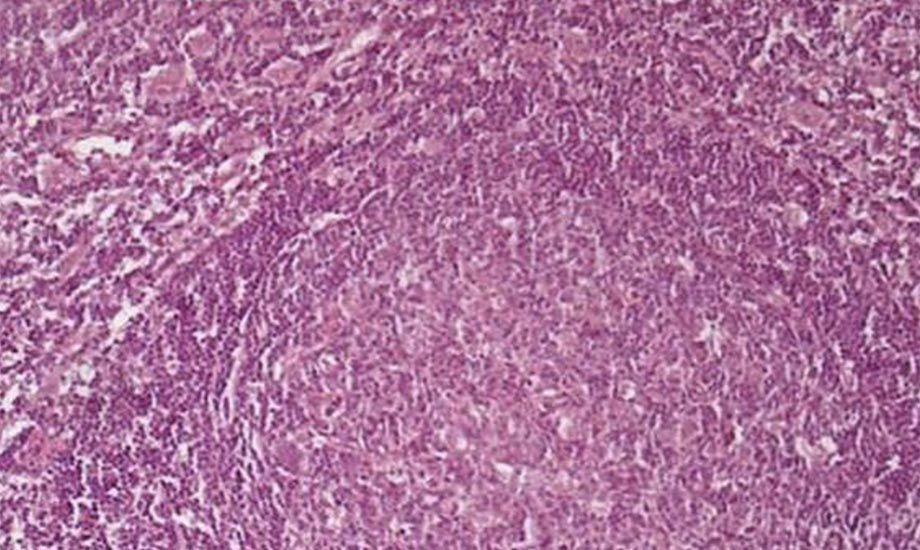
Fixation is a crucial step because it significantly affects the morphology of the cells, thereby impacting the final analysis results. Mr. Ralf Lieberz provided us with an example of this. As shown in the first image, cells that underwent an improper fixation process (due to reasons such as an incorrect amount of formalin or improper fixation duration) lack contrast, exhibit altered cellular morphology and display numerous artifacts. Conversely, in the second image, the same sample treated with a correct fixation process demonstrates good cellular morphology and satisfying HE staining.
Fixation is a crucial step because it significantly affects the morphology of the cells, thereby impacting the final analysis results. Mr. Ralf Lieberz provided us with an example of this. As shown in the first image, cells that underwent an improper fixation process (due to reasons such as an incorrect amount of formalin or improper fixation duration) lack contrast, exhibit altered cellular morphology and display numerous artifacts. Conversely, in the second image, the same sample treated with a correct fixation process demonstrates good cellular morphology and satisfying HE staining.

Latest Articles

Milestone at NSH 2025 in Long Beach
Milestone is proud to announce our participation in the NSH 2025 Convention, taking place September 26–30, 2025 at the Long Beach Convention Center in Long Beach, California. Visit us at Booth #417 to experience the latest in histology innovation and see LeanDECAL in action — our newly launched solution for fast, standardized, and reproducible bone decalcification.

Kaiser Permanente: Enhancing OR Staff Safety with UltraSAFE
Kaiser Permanente Sacramento’s AORN 2025 poster showcased how the UltraSAFE Automated Formalin Dispenser reduced OR chemical exposure from 13% to 0%. The key outcomes of the UltraSAFE study include: eliminating spills, enhancing staff safety and confidence, and ensuring optimal conditions for specimen preservation.

Meet us at USCAP 2025 in Boston
USCAP 114th Annual Meeting will take place from 22 to 27 March 2025 at the Boston Convention Center – Boston, MA. Networking, learning, and striving for success, we’ll be there to take you on a journey of innovation, exploration and education. Meet us there!